Why the difference matters
At first glance it seems a basic question, but “laser engraving” and “router engraving” are used interchangeably all the time. That confusion can cause misunderstandings between the person ordering the part and the person making it, and end in a finish that was not expected. Here is how each one works.
Laser engraving
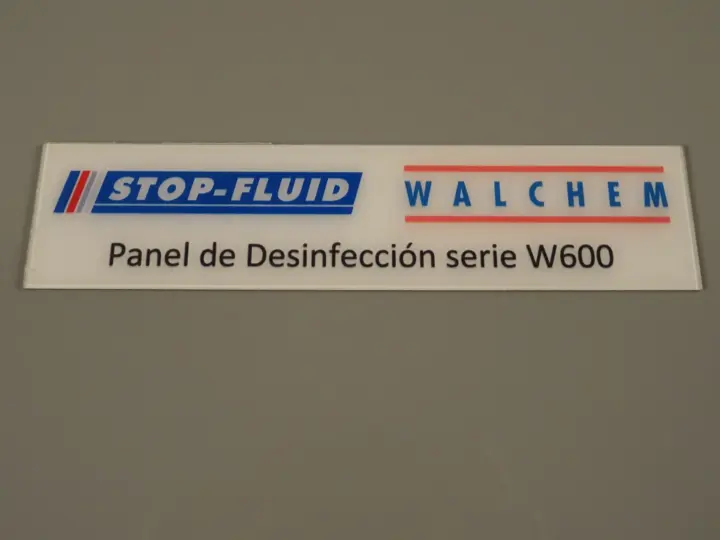
In laser engraving, the surface material is removed or vaporised by the beam of light. Nothing touches the part.
- On acrylic, the engraving comes out white and frosted, even on black acrylic.
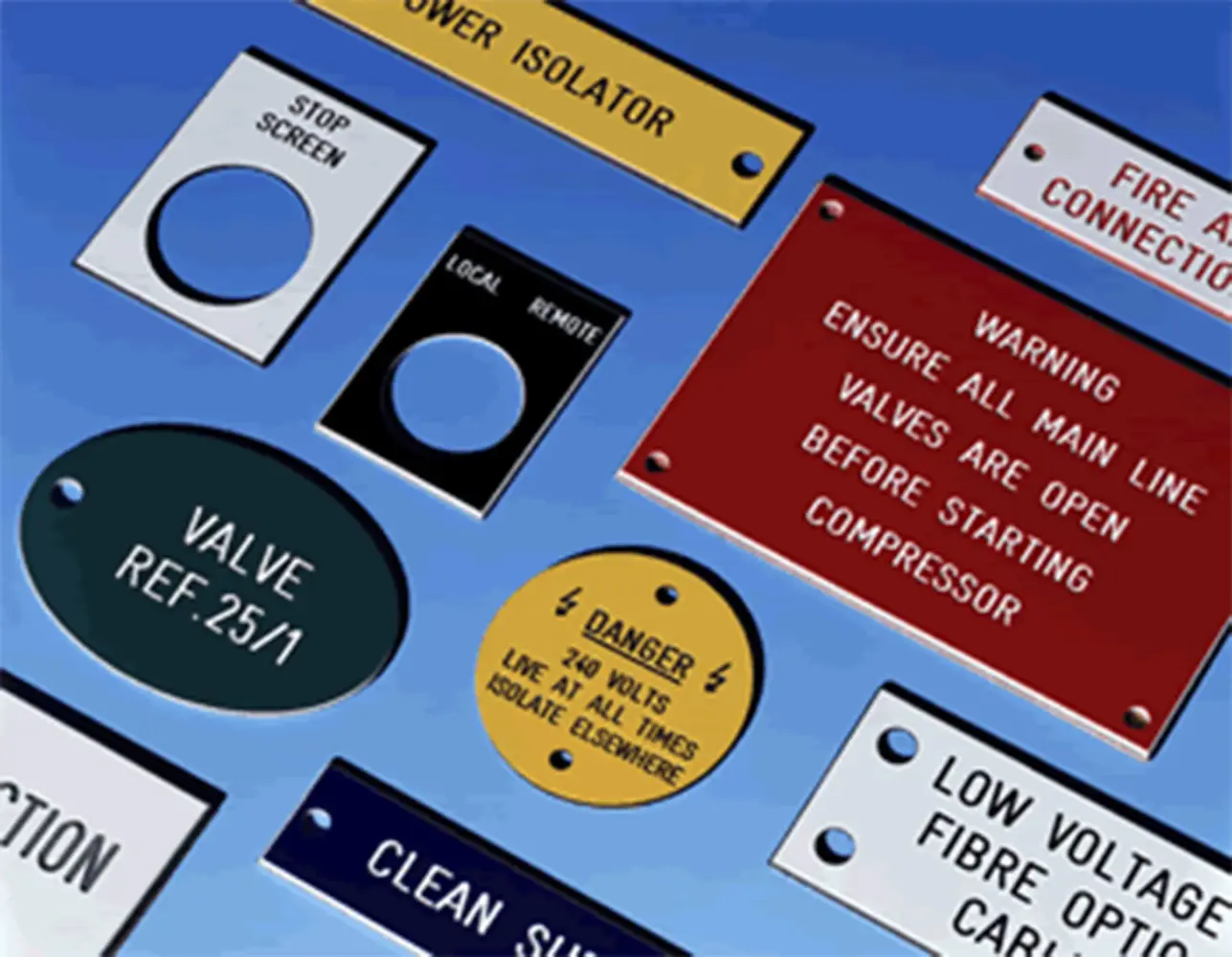
- On two-layer plastic (Gravoply-type ABS), a thin layer of one colour, the “cap”, is laminated onto a contrasting colour, the “core”. The laser removes the cap to reveal the core: this is how many signs are made, for example for bus stops or taxi ranks.
- Advantages: very fine detail, small logos and text without distortion, a clean finish and no mechanical stress on the part.
CNC router engraving
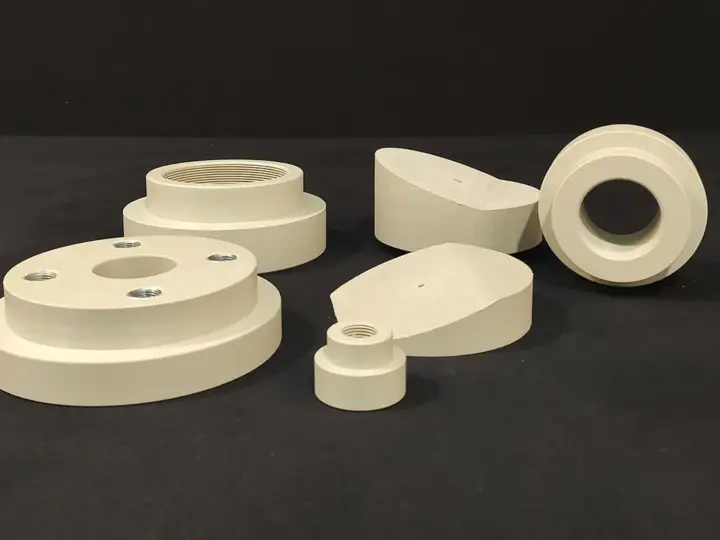
A router bit is a rotating tool that removes material mechanically. Guided by numerical control (CNC), it follows the design with great precision.
- Advantages: controlled depth, recesses, grooves and relief; it handles large thicknesses and materials the laser does not cut well, such as polycarbonate or polyethylene.
- In practice: the router also cuts right through parts; for signage and display work, smooth cuts and polished edges need particular care.
Quick comparison
| Feature | Laser engraving | CNC router engraving |
|---|---|---|
| How it works | Vaporises the surface, no contact | Removes material with a tool |
| Detail | Very high: small text and fine logos | High, limited by the bit diameter |
| Depth | Surface only | Controlled, including deep recesses |
| Appearance on acrylic | Frosted white | Machined groove, can be colour-filled |
| Materials | Acrylic, two-layer ABS, wood… | Acrylic, polycarbonate, polyethylene, PVC, Dibond, wood |
| Ideal for | Awards, thin plaques, personalisation | Technical parts, recesses, joints, large thicknesses |
And for cutting?
For shaped cuts in acrylic up to 15 mm, the laser leaves a polished edge straight away. For greater thicknesses, other materials or parts with recesses and joints, we use the CNC router and then polish the edge. Other cutting technologies exist, such as waterjet, which is more common for metal and stone.
Our recommendation
- Awards, plaques, card holders, fine logos → laser engraving.
- Technical parts, panels with recesses, materials unsuited to laser → CNC machining.
- Often, both: we cut the part with the router and engrave it with the laser, or the other way round.
Understanding this basic terminology will help you explain what you need and receive exactly what you expect. If in doubt, send us your design and we will advise you.