What milling or machining means
Milling means removing material, as chips, with a rotating multi-edged tool called a cutter or bit. It is used to cut shapes, drill, pocket, bevel and make recesses and joints. Machining covers all of these operations.
By hand it would be very hard to achieve the same precision. With computer numerical control (CNC), the machine follows the computer design and repeats each part exactly. The operator’s skill is still essential: they prepare the program, choose the tool and check that each process follows its procedure.
How a CNC router works
Its main parts are:
- Cutter: shapes the part.
- Axes: move the tool in several directions.
- Workholding: holds the material in place during milling.
- Interface: reads the design (CAD) or manufacturing (CAM) files and controls the machine together with the operator.
Operations always follow the same steps:
- Loading the CAD or CAM file.
- Setting up the material and the right cutter.
- Milling, controlled from the interface.
- Inspecting the quality of the part.
Materials we machine
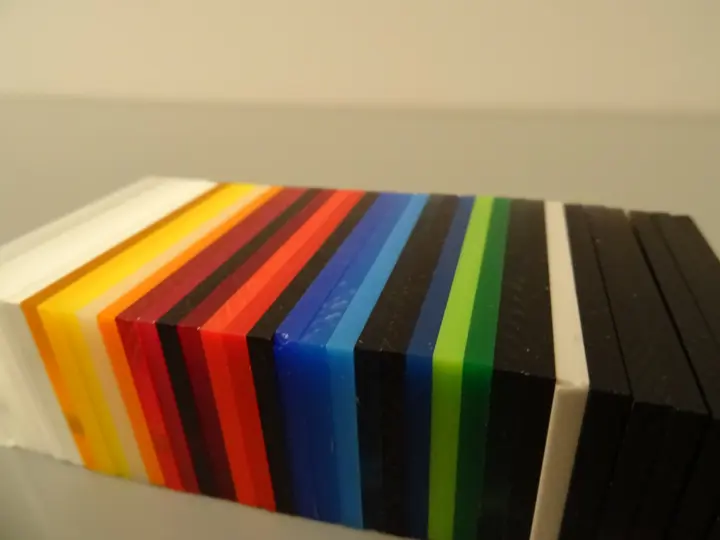
Our speciality is acrylic, but we also machine:
- Solid polycarbonate: almost unbreakable, heat resistant and UV protected.
- Polyethylene PE 500 and PE 1000: highly abrasion resistant and food safe.
- Foamed and solid PVC, versatile and light.
- Polypropylene.
- Composite panel (Dibond).
- Wood and wood-based boards, for joinery, interior design or construction projects.
Advantages of CNC machining
- Accuracy: the part matches the dimensions in the file, whether it is a prototype or the final product.
- Repeatability: every part in a series is the same.
- Less waste and fewer errors, which lowers the cost of each run.
- Versatility: flat and three-dimensional parts of varying complexity.
- Safety: the operator is not exposed to the cutting tool.
Parts we make
On our router, with a 3660 × 1220 mm bed, we have made:
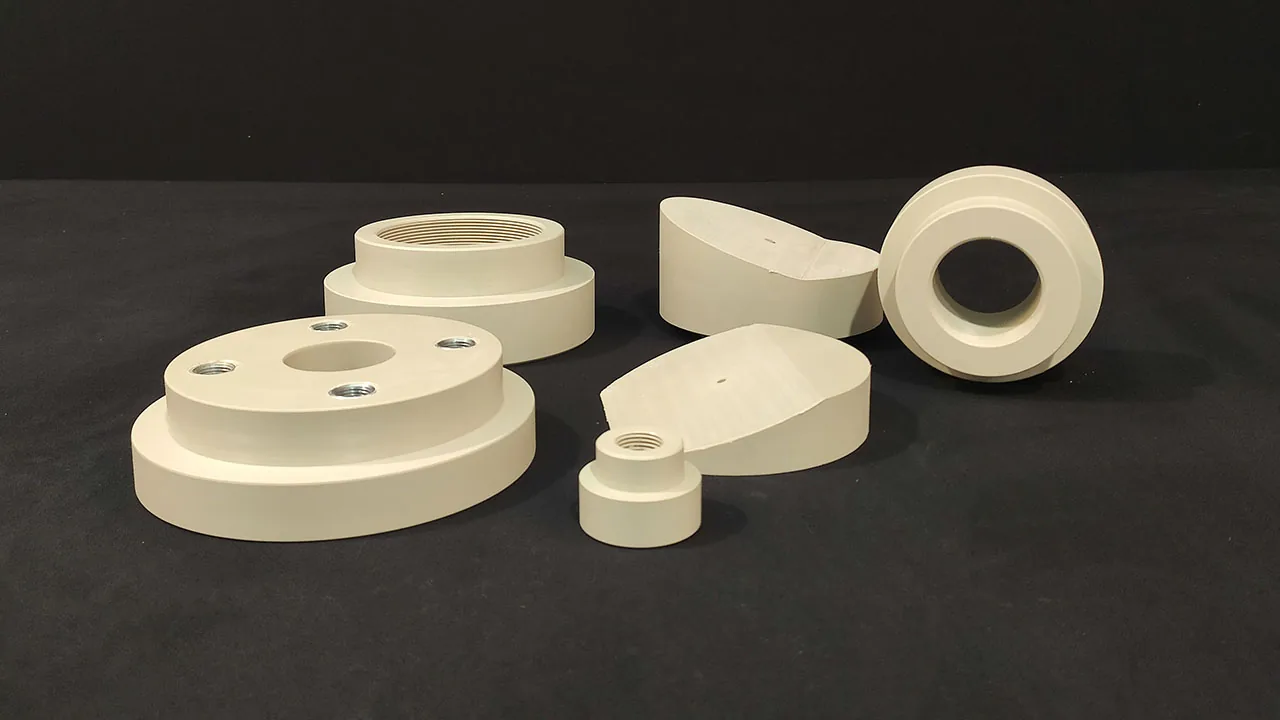
- Flanges in 15 mm black acrylic bolted with stainless steel.
- Threaded pipes with a seal for complete watertightness.
- Polypropylene parts to take bars and polyethylene parts for machinery.
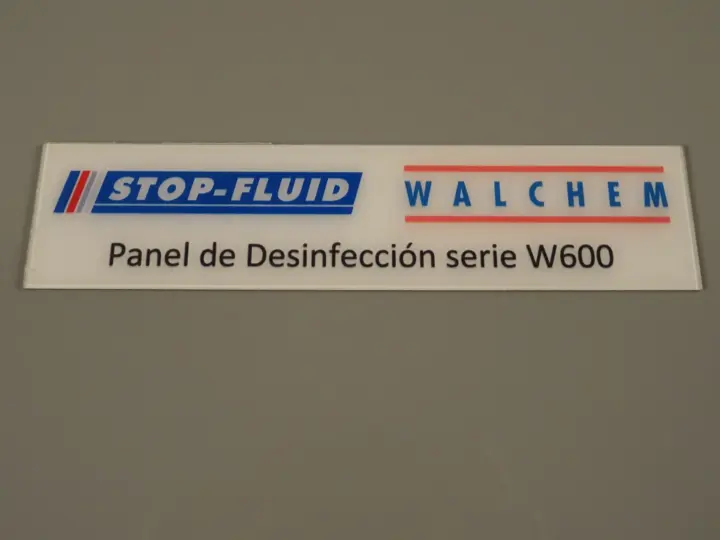
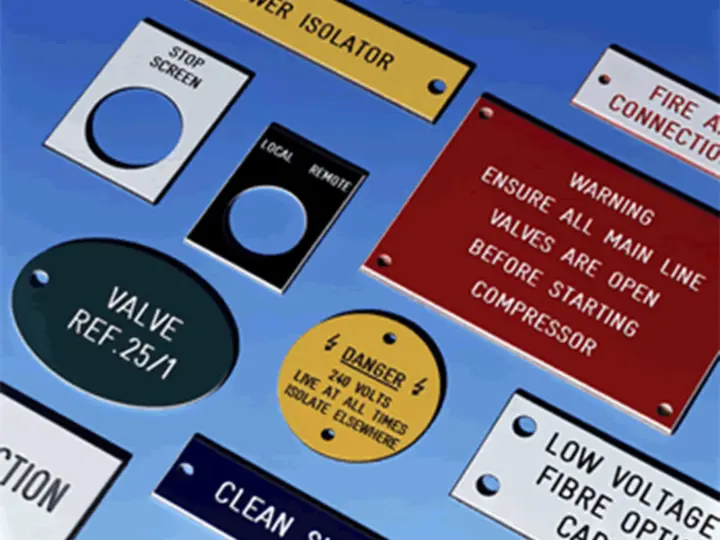
- Control panels with UV printing for fire-fighting equipment.
- Prototypes, brackets, rollers, joints and valve bodies.
- A bioreactor for Pablo de Olavide University.
See photos in machined parts and technical panels.
After milling
The edge finisher removes irregularities from the edge and leaves the part ready to be polished back to a shine. Turned parts are finished on the lathe, and branded parts with UV printing or laser engraving.
How to order a machined part
Send us a dimensioned drawing (DXF, DWG or PDF), the material and the quantity. If you only have an idea, we will help you define it.